


13.05.2022
Atom in the shadow of politics

Photo by Dreamstime
‘While assessing whether the atom can be included in the taxonomy, the European Commission turned to the Joint Research Centre (JRC) for a scientific opinion on whether nuclear power can be treated as an energy source that falls into the so-called sustainable development. Obviously, the JRC report was favourable for nuclear power. Despite the scientists’ opinion, some political powers wished that the atom hadn’t been included’, says Paweł Gajda, DSc from the Faculty of Energy and Fuels.
Read the first part of the interview with the expert in nuclear power. Another part will be published soon.
Has the war in Ukraine fuelled world’s fears or hopes related to nuclear power?
It’s hard to say unequivocally, we’d have to dig into appropriate opinion polls and these are not simply there yet. However, we can notice first signals of both of these emotions. On the one hand, nuclear power and the fears connected thereto have once again made it broadly to the media, especially immediately after the Russians had seized the Zaporizhzhia Nuclear Power Plant or the Chernobyl Exclusion Zone. Ultimately, we’ve seen that these events had no serious safety ramifications, not least as far as Poland is concerned. It should be stressed that to damage a nuclear power plant in a way that could result in contamination reaching beyond the plant itself, it would have to be a deliberate attack with the use of ammunition used to destroy bunkers. Even then, the effect would be local. Therefore, in the event of a random shelling, it’s impossible to cause this type of damage. In any case, the building of one of the Zaporizhzhia Nuclear Power Plant was hit by a projectile, which, fortunately, did not cause any serious damage.
On the other hand though, the war in Ukraine has once again seriously touched on the issues of energy security and the sources from which we import our raw materials. Here, nuclear power has popped up in discussions again; for a second, there has even been a political debate thereon in Germany: whether the country should postpone its planned nuclear phase-out. In any case, entire Europe, and even the world, has acknowledged that the necessity of swift opt-out from fossil fuel imports, especially natural gas and oil, from Russia may propel the talks on the future of nuclear power.
Why have countries, such as Germany, opted for a nuclear phase-out?
Nuclear power has always been accompanied by protests. At first, people associated power plants with nuclear weapons. The same groups have often opposed both. Later, fears of safety came onto the stage. As a result, in the majority of European countries, especially in the West, the society is rather against nuclear power. And to obtain political interest, which such sizeable state programmes need, there has to be social support for them.
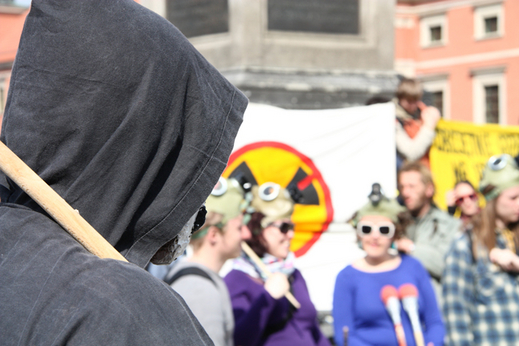 ‘Nuclear power has always been accompanied by protests’, says Paweł Gajda, DSc; photo by Dreamstime
Therefore, everything stems from political objection to the atom. Modern “greens” are very often rooted in hippies and anti-war movements. Depending on the extent of political influence they had in respective countries, they made different decisions. The most prominent example is, of course, Germany, where, already in the 1990s, they have declared a gradual phase-out from nuclear power and a strong resolution to go for renewable energy sources. Bear in mind that it was the same SPD/Greens government that a dozen or so years ago determined the nuclear phase-out programme and commenced large projects in the renewables sector; additionally, it has also signed contracts for the import of Russian gas and oil to Germany. This policy has been continued by the subsequent German administrations.
An example from the opposite side of the spectrum is France, which has firmly opted for the atom in the 1970s. The chief argument for it was the provision of energy security because the French do not have as many energy resources as they need.
What is the political support for nuclear power in Europe now?
We can say that the European countries are split over the atom. It’s clear that those states on our side of the continent – Poland, Czech Republic, Slovakia, and Hungary – view atom more favourably than the West. Among the countries that opted for a nuclear phase-out are predominantly Germany and Belgium.
If we’re talking countries that are already building or plan to build nuclear reactors, we have France with one under construction and considerations about the next one, and Great Britain, where they are building two and plan to construct more. Slovakia has also been building two reactors.
The Hungarians are very close to commencing the construction of two more reactors. However, the contractor for this project was Rosatom, and, at the moment, there are talks on whether to import technology from Russia. Looking at Hungary’s politics, it appears that, as of now, the project will be greenlit, although nothing’s certain. A similar situation occurred in Finland, which recently started the EPR reactor produced in France; however, at Hanhikivi Nuclear Power Plant, they planned to construct the WWR-1020 reactor manufactured in Russia. In relation to the events in Ukraine, the Finns decided to sever their cooperation with Rosatom, so the project died. They will probably be looking for another supplier.
Map of nuclear technology suppliers
How big of a player is Russia on this market?
The Russians have always been very active in many countries in terms of exporting their nuclear technology. Russian reactors are obviously operating chiefly in the countries of the former Soviet Bloc. In the EU, we can find them in the Czech Republic, Slovakia, and Hungary, but also in Finland. However, at the moment, the European market – maybe except for Hungary – seems completely shut for the Russians for the foreseeable future.
Other huge receivers of Russian technology were China and India, where Russian reactors have been operating and new ones are being constructed. But the Russians are also active in countries that have just begun their journey with nuclear power plants. Turkey and Bangladesh, for instance, or preliminary works in Egypt that near conclusion. In a number of African countries, advanced talks are at play.
Who else is a nuclear technology supplier?
The list is rather short. China has begun exporting its technologies, but its entrance to the European market is difficult for geopolitical reasons. The French construct their own reactors on their land, but also in Great Britain, and they have recently completed the project in Finland. Two EPR reactors of French origin are in operation in China. Another supplier is the USA, where we have companies such as General Electric Hitachi, if we’re talking sizeable nuclear reactors with boiling water reactors; and Westinghouse, which is responsible for the AP-1000 pressurised water reactor. There’s also South Korea, which, until now, has built one power plant abroad, in the United Arab Emirates (two reactors in operation, two more under construction).
In the context of the Polish or Czech nuclear programmes, the talks most often boil down to three potential suppliers: the American Westinghouse, the French Framatom, and the Korean KEPCO.
And what did this market look like in the past?
Historically speaking, more European countries had access to their own technologies. When nuclear power programmes began, many countries had their own types of reactors. Among others, the French and the British had their own technologies. Interestingly, these were gas-cooled reactors, but in the long run they proved to be a technological dead end. Obviously, the Soviet Union had its own nuclear technologies. They developed the RBMK (graphite-moderated) reactors – one of such was constructed in the first nuclear power plant in the world, Obninsk; and light-water reactors. The latter technology was exported to Soviet-friendly countries. The Canadians developed heavy-water reactor technologies – CANDU. Outside of Canada, these are found in India and Romania.
But the most widespread nuclear technologies came from the USA – pressurised water reactors and boiling water reactors. The remaining countries using these technologies, apart from those using Russian technology, implement reactors originating from American constructions. And many countries, due to this transfer of technologies, have developed their own versions. Take the German Siemens, which has developed a few models of its own, including a very successful version, operating to date, i.e., the Convoy reactors. A step further from the American technology are modern Korean reactors. The French have also chosen a similar path, as they went from gas reactors to their currently used fleet of nearly 60 pressurised water reactors, by developing their own project based on the American technology. In turn, modern Chinese projects are based on French ones.
Nuclear power in the EU taxonomy
Not without controversy, nuclear power has recently been included in the EU taxonomy. This means that EU money can be spent on funding various projects in this sector. At the same time, policy makers determined that it shall be a transitional energy source until the completion of the energy transformation. To what extent can the atom help the EU achieve its goals, i.e., the creation of a completely zero-emission economy until 2050?
Bear in mind that the decision on what to include in the taxonomy was political. Initially, the atom was out of the question. But countries that are planning to expand nuclear power facilities – France in the West and, among others, Poland, Slovakia, the Czech Republic, and Hungary in the East, as well as Finland – opted for its inclusion. The fact that it finally made it to the list, albeit conditionally, is a token of political compromise. Another part of this compromise, which we mustn’t forget, was the inclusion of natural gas in the taxonomy.
It’s important to note that while assessing whether the atom can be included in the taxonomy, the European Commission turned to the Joint Research Centre (JRC) for a scientific opinion on whether nuclear power can be treated as an energy source that falls into the so-called sustainable development. Obviously, the JRC report was favourable for nuclear power. Despite the scientists’ opinion, some political powers still wished that the atom hadn’t been included.
 ‘Bear in mind that the decision on what to include in the taxonomy was political’, says Paweł Gajda, DSc; photo by Dreamstime
Furthermore, if we look at the scenarios presented in the most recent IPCC report, which can lead us to climate neutrality, the majority implies a global increase in energy from nuclear power in comparison to today’s input. Meanwhile, in Europe, and the world too, the overwhelming majority of reactors are already aged. In some cases, we’ll be able to extend their operation, this happens already in the USA, where some reactors received licences even for 80 years. In many cases, we’ll have to not only build new reactors, but also replace a portion of the ones we’ll be forced to successively shut down. New projects will have to be huge.
Atom and energy transformation
In the context of energy transformation, what advocates for nuclear power?
Firstly, it’s the largest zero-emission source of energy in Europe. When we take a look at its individual sources, it produces more than hydropower, wind power, and photovoltaics. Approximately 1/4 of EU’s electricity comes from nuclear power. Already now, Europe faces a huge problem of replacing aging power plants. And bear in mind that decarbonisation influences not only the power industry, but the entire economy, including transport and heating. We have to replace fossil fuels with other energy sources everywhere. Simultaneously, due to the electrification of subsequent sectors of the economy, the production volume of electricity will increase.
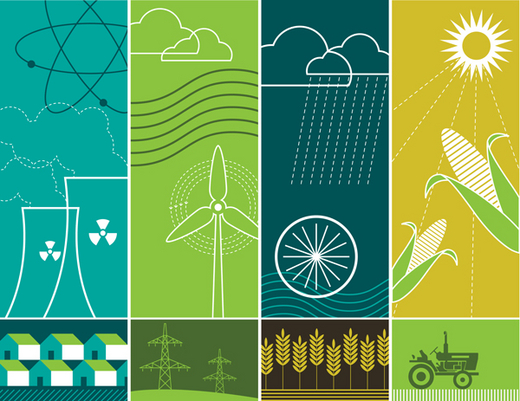
We shouldn’t forget that when it comes to zero-emission sources, in the big picture, we have four to use: nuclear, hydro-, wind, and solar powers. Other sources, such as geothermal energy, may be useful only in specific geographical locations. Whereas only nuclear power and hydropower are controllable, that is, we can decide how much energy these sources will produce. Whereby hydropower is also geographically bound and its potential in Europe has already been exploited to a considerable degree.
Of course, meaningful projects are expected for both power and photovoltaics. However, in the system, these must be supported by energy from other sources. A system so weather-dependent would have to be capable of storing energy on a huge scale. And such technologies, which we could easily calibrate, simply do not exist today.
The construction process of a nuclear power plant is long-lasting, not only because of the necessity of actually building the entire infrastructure, but also because of extensive administrative procedures. Does the atom have a chance to offer help in energy transformation to countries that had not invested in it yet?
Most certainly yes. In a matter of 15 years, maybe sooner, you can build a nuclear power plant, provided that there is a constant political will to make it happen. Let’s take the United Arab Emirates as an example: first talks about the atom were held there in 2008/2009. This occurred, more or less, in the time when the subject began to re-emerge in Poland. Today, the first reactors are already running. The feature of nuclear programmes is that they take time to acquire impetus, but once the reactors start popping up, expanding on the infrastructure is quick. Take, for example, the most successful nuclear programmes, such as the French one from the 1980s or the Swedish one.
Of course, it’s not that we can sit tight and do nothing until we launch our nuclear power plant. We should invest in renewables that are to help us reduce emissions right now. At this point, the percentage of fossil fuels in the Polish energy mix is somewhere above 80%. By creating new renewable powers, we won’t be reducing the peak demand for power in conventional power plants, but we will decrease the demand for energy production therein. This will allow us to reduce emissions and the need for fossil fuels, which is especially relevant when we have to import them.
In the second part of the interview, which we will publish soon, we talk about technologies and innovation in the nuclear power industry.
***
Paweł Gajda, DSc, was interviewed by Piotr Włodarczyk from the AGH UST Centre for Communication and Marketing.
All rights reserved © 2021 AGH University of Science and Technology